

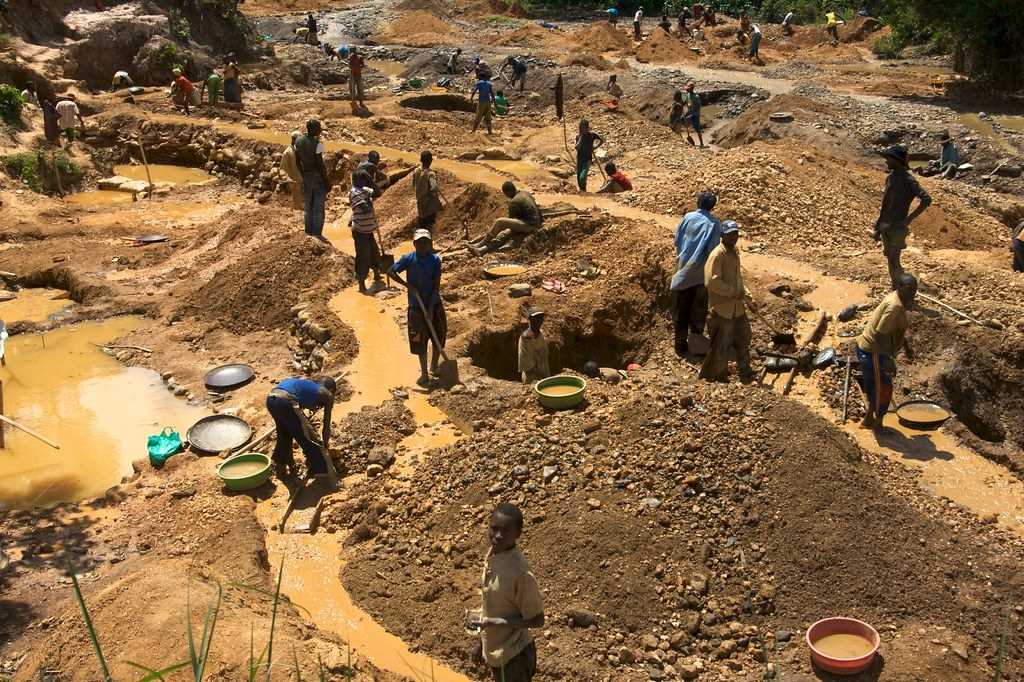




Zimbabwe is emerging as one of the most strategically positioned mining jurisdictions in Sub-Saharan Africa as rising global demand for critical minerals reshapes investment priorities across the continent.
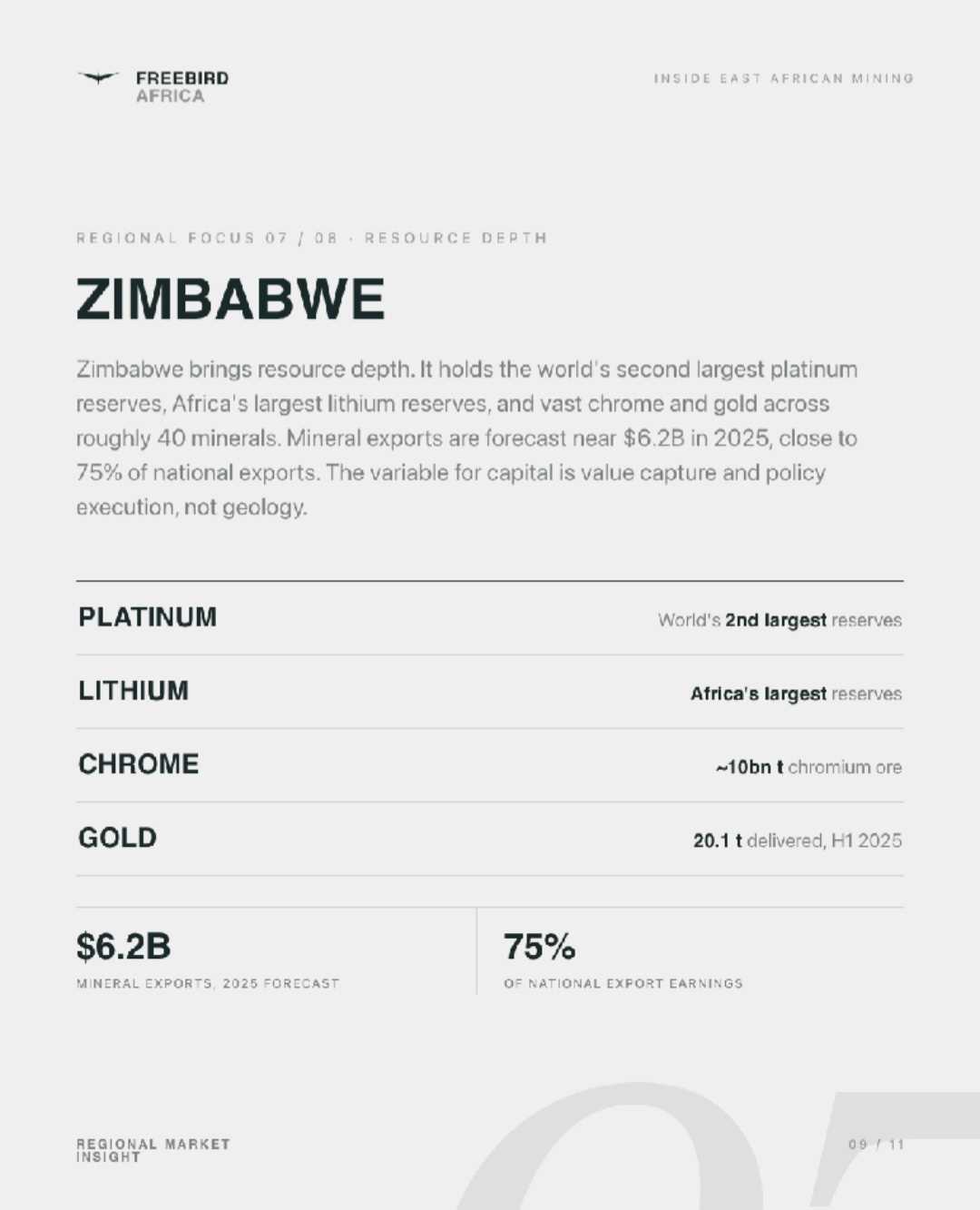
According to a regional mining outlook published by Freebird Africa, Zimbabwe possesses some of the world's most significant mineral endowments, including the world's second-largest platinum reserves, Africa's largest lithium reserves, and substantial chrome and gold resources spread across nearly 40 commercially exploitable minerals.
The report projects Zimbabwe's mineral exports to reach approximately US$6.2 billion in 2025, accounting for around 75% of the country's national export earnings. Gold deliveries reached 20.1 tonnes during the first half of 2025, while the country is estimated to hold roughly 10 billion tonnes of chromium ore.
The findings come as global commodity markets continue to strengthen, with gold trading above US$4,100 per ounce, copper nearing US$13,600 per tonne and lithium carbonate around US$24,500 per tonne. Analysts say these prices reflect growing international focus on mineral security, supply chain resilience, processing capacity and responsible sourcing.
Freebird Africa notes that the future competitiveness of mineral-rich economies will increasingly depend on their ability to move beyond raw commodity exports and capture more value through local beneficiation, refining capacity, infrastructure development and stronger governance frameworks.
Related Stories
The report highlights a broader shift taking place across eight East and Central African mining jurisdictions, where mining is becoming increasingly interconnected with logistics, power infrastructure and industrial policy.
While Zimbabwe's geological potential remains one of its strongest advantages, the report argues that future investment decisions will be influenced as much by policy execution, regulatory certainty and value-addition strategies as by the size of mineral deposits themselves.
Across the region, countries are positioning themselves to benefit from growing demand for critical minerals used in energy transition technologies. The Democratic Republic of Congo remains dominant in cobalt production, Zambia is pursuing ambitious copper expansion targets, while Tanzania, Rwanda, Uganda, Kenya and Mozambique continue to strengthen their positions within regional mineral supply chains.
According to the report, value creation in the mining sector is increasingly moving upstream. Citing United Nations Trade and Development (UNCTAD) findings, Freebird Africa notes that refined lithium, graphite, nickel and cobalt can command three to four times the value of their raw forms.
As a result, investors are placing greater emphasis on factors such as infrastructure access, environmental standards, technical disclosure, social licence to operate and commercial execution when evaluating mining opportunities.
"The next phase of African mining will be won by those who can turn mineral endowment into responsible, bankable and sustainable value," the report concludes.
The assessment suggests that for Zimbabwe and other resource-rich African economies, the challenge is no longer simply extracting minerals but converting geological wealth into long-term industrial and economic value.






Leave Comments